 |
Loginoder neu registrieren? |
|||||
              
| ||||||
SucheSuchen Sie im kath.net Archiv in über 70000 Artikeln:     Top-15meist-diskutiert
| 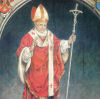 CHRIST WANTED ONE CHURCH OPEN TO EVERYONE4. Mai 2007 in English, keine Lesermeinung The Holy Father received prelates from the International Episcopal Conference of Sts. Cyril and Methodius, who have just completed their "ad limina" visit. VATICAN CITY (kath.net/VIS) The Pope greeted the bishops recalling how they "come from different countries that have different ethnic groups, cultures and languages," but how nonetheless their "ecclesial communities are united by the same faith in the Risen Christ handed down to us by the Apostles." "The various countries and the various social and religious environments in which your faithful live," said the Pope, "bring no small number of repercussions to their Christian life." These include questions such as "marriages between people of different confessions or religions which require ... particular spiritual attention and a more harmonious cooperation with other Christian Churches, ... the religious education of the new generations," and "the formation of sacred ministers and their spiritual accompaniment in a multi-confessional environment." "It is important to help seminarians" and for priests "to cultivate an intimate relationship with Jesus if they wish to accomplish their mission to the full and not just see themselves as simple 'employees' of an ecclesiastical organization. The priest is at the complete service of the Church, a living and spiritual organism that draws her energy not from nationalistic, ethnic or political factors, but from the action of Christ present in her ministers. "The Lord," Benedict XVI added, "wished His Church to be open to everyone. ... Over the course of the centuries, Tradition maintained [the Church's] universalistic character unaltered as she slowly spread and came into contact with different languages, races, nationalities and cultures." The Holy Father then went on to refer to the difficult mission faced by prelates from this episcopal conference, and encouraged them "to be an evangelical 'leavening' that ferments society" and to seek to involve "all members of the People of God, using all available tools of Christian formation, translated into the various languages of the people. Such joint pastoral action cannot but bring beneficial effects," also in the field of civil society. "Today, a poorly understood modernity tends to give exaggerated emphasis to the requirements of the individual, to the detriment of the duties that all people have towards God and towards the community to which they belong." Hence it is important "to highlight a correct conception of civil and public responsibility, because from such a vision arises the commitment to respect the rights of each, and the real integration of one's own culture with that of others." "Providence placed your peoples on a European continent that, over these years, has been undergoing a process of reconstruction. Your Churches also consider themselves as part of this historical process, well knowing that they have their own specific contribution to make. Unfortunately there is no lack of obstacles: the scarcity of means because of the economic situation, and the paucity of Catholic forces. Nor is it easy to forget the difficult heritage of 40 years of," communism "that gave rise to forms of social behavior not conducive to freedom and personal responsibility. At the same time, it is difficult to resist the temptation of Western materialism." "Do not lose heart!" the Holy Father concluded, reminding the prelates that the Lord "has put you in close contact with our Orthodox brethren. As limbs of the one Body, seek all possible forms of collaboration in the service of the one Kingdom of God. Do not be unwilling to collaborate with other Christian confessions and with all people of good will in order to promote everything that may help propagate the values of the Gospel."
Ihnen hat der Artikel gefallen? Bitte helfen Sie kath.net und spenden Sie jetzt via Überweisung oder Kreditkarte/Paypal!  LesermeinungenUm selbst Kommentare verfassen zu können müssen Sie sich bitte einloggen. Für die Kommentiermöglichkeit von kath.net-Artikeln müssen Sie sich bei kathLogin registrieren. Die Kommentare werden von Moderatoren stichprobenartig überprüft und freigeschaltet. Ein Anrecht auf Freischaltung besteht nicht. Ein Kommentar ist auf 1000 Zeichen beschränkt. Die Kommentare geben nicht notwendigerweise die Meinung der Redaktion wieder. |  Mehr zuEnglish
|       Top-15meist-gelesen
| |||
 | ||||||
© 2026 kath.net | Impressum | Datenschutz | ||||||
